
Professional indemnity insurance in NZ
Professional indemnity insurance pays when your advice, design or professional work costs a client money and they come after you. A broker goes to a number of NZ insurers for you and comes back with options in plain English. General information only.

in claims paid since 2018
clients
rating on Google

Who needs professional indemnity insurance in NZ?
If clients act on your advice, designs or sign-off, you need it.
- Engineers, architects and surveyors
- Accountants, consultants and designers
- Tradies who design, specify or certify work
Not sure which of these you need? That's what the call is for.
A quick 10 minute call about how your business works and what could go wrong. Then we go to a number of NZ insurers and come back with options in plain English. Fill in the form and we'll be in touch the same business day.
What does professional indemnity insurance cover?
Here's the usual lineup. Your broker sorts out the fine print. General information only.
Negligent advice or errors
Pays when a client says a mistake in your advice, design or work cost them money. A wrong measurement on a plan is the classic.
Legal defence costs
Covers the cost of defending a claim, even one that goes nowhere. Check whether it sits inside or outside your limit.
Claims-made timing
Most policies respond to claims made while you're covered, not when the work was done. So keep the cover going.
Past work
A retroactive date decides whether older jobs are in. Get that wrong and past work could be left out.
Do I need professional indemnity insurance in NZ?
Most NZ businesses that sell advice, designs or sign-off should have professional indemnity insurance. It pays when a client says a mistake in your work cost them money and they come after you. It isn't a legal must for most, but clients, main contractors and councils often ask for it before they'll sign.
Who usually needs it?
Consultants, designers, engineers, architects, surveyors, accountants and IT contractors. Tradies count too if you design, specify or certify work, like a builder doing design-and-build or a sparky signing off a system. If clients act on your advice, you need it. A one-person band counts.
What does it usually cover?
Think of it as cover for the advice you give, not the jobs you do. It pays when a mistake, oversight or bad advice in your work cost a client money. Plans, reports, specs and certificates all count. Defence costs are usually included, even if the claim goes nowhere. Most policies are claims-made, so they respond to claims made while the policy is in force. A retroactive date decides whether older jobs are in.
What isn't covered?
Injury and damage to other people's property sit under Liability Insurance. Decisions made by directors sit under Management Liability. Your own tools and gear sit under Tools and Equipment. Deliberate wrongdoing and fraud aren't covered, full stop. Liability you accept in a contract, beyond what the law would give the client, is often excluded too.
What affects the price?
The type of work you do, your turnover or fees, and your claims history. Then the limit you pick, the excess you're happy to carry, and how big your projects are. Bigger limits and riskier advice push the premium up. A low premium with a big excess just shifts the cost to you on claim day. Your broker gets quotes from a number of NZ insurers, so you're not guessing.
What will my broker check?
- Whether the policy is claims-made, and the retroactive date.
- The limit, and whether defence costs sit inside or outside it.
- The excess on a claim.
- Exclusions, including liability you accept under contract.
- What your client contracts say you must have.
- Whether subbies or other consultants carry their own cover.
What does that look like in real life?
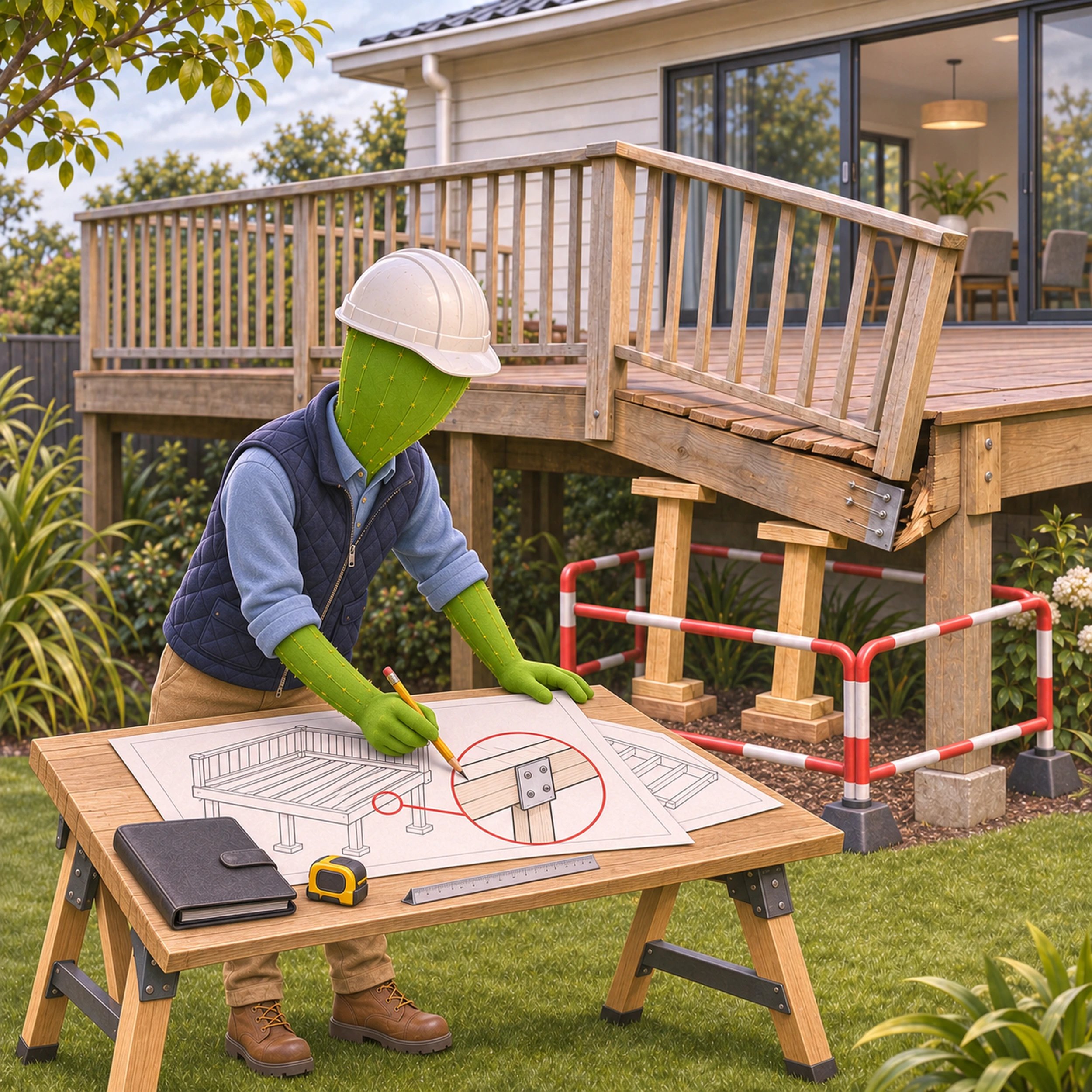
A designer specifies the wrong fixings on a deck plan. The deck fails two years later and the owner wants the repair costs and more. Without cover, that bill and the legal fees are yours. With the right cover, your broker helps you lodge the claim and keeps you posted.
Not sure where you stand? Have a yarn with a broker. Ten minutes about how you work is usually enough to see what's in place and what's missing.
Written by Georgia Paul, Commercial Broker, Cactus. Last reviewed 28 October 2026. General information only.
Which industries need professional indemnity insurance?
Pick your trade and see what usually matters for it.

Professional and Office Services
Clients act on your advice and reports, so one mistake can land you with their financial loss.

Engineering and Manufacturing
A design or specification error can cost a client far more than the job was worth.

Builders
Design-and-build jobs and plans you sign off can come back on you if something's wrong.

Civil and Groundworks
Site planning and specifying ground works leaves you exposed if the advice turns out wrong.

Electricians
Designing and certifying electrical systems means you answer for it if the design falls short.

Plumbers
Specifying and signing off plumbing and drainage work can leave you carrying the can for errors.

Welders and Fabricators
Fabricating to a client's drawings or spec? If it doesn't fit or fails, they'll look to you.

Salons and Beauty
Advice on treatments and products can go wrong, and a client who loses out may claim.
Professional indemnity insurance questions in NZ, answered
General information only. It isn't personal advice. Talk to a broker about your situation.
What does professional indemnity insurance cover?keyboard_arrow_down
It covers claims that a mistake, oversight or bad advice in your work cost a client money. That includes the cost of defending the claim, even if it goes nowhere. It's cover for the advice you give, not injuries or property damage. A broker can check the wording fits how you work in NZ.
What's the difference between professional indemnity and liability insurance?keyboard_arrow_down
Liability insurance pays when your work or premises injures someone or damages their property. Professional indemnity pays when your advice, design or sign-off costs a client money. A builder doing design-and-build might need both. Your broker lines them up so nothing's doubled up or missed.
Do tradies need professional indemnity insurance in NZ?keyboard_arrow_down
Not by law, but plenty of NZ clients and main contractors ask for it. If you design, specify or certify work, it's worth having. That includes builders doing design-and-build and sparkies signing off systems. If your contract says you must carry it, you need it before you start the job.
What does claims-made mean?keyboard_arrow_down
It means the policy in force when the claim is made responds, not the one in force when you did the work. So you need to keep your cover going, even after a job's finished. A retroactive date decides how far back your older NZ work is covered.
How much does professional indemnity insurance cost in NZ?keyboard_arrow_down
It depends on the type of work you do, your turnover or fees, claims history, the limit you pick and the excess you carry. A small design practice pays a different premium to a big engineering firm. A broker gets quotes from a number of NZ insurers, so you can compare options without ringing around.
How do I get professional indemnity insurance in NZ?keyboard_arrow_down
Fill in the form and a broker will be in touch the same business day. You'll have a quick 10 minute call about how your business works. Then we go to a number of NZ insurers and come back with options in plain English. You choose what suits.
Expert brokers at your fingertips
Got a question? Give us a ring and have a yarn with a real broker. We're here 8am to 6pm.
Busy on the tools? We'll call you.
Pick a time that suits and a broker will ring you back for a quick chat.
Spread the cost
We have payment options available, so you can pay for your insurance in regular instalments instead of one big hit. Costs and conditions vary.
Get a professional indemnity insurance quote
Fill this in and a real broker will contact you the same business day.