
Roofers insurance in NZ
Steep pitches, hot torches and a roof that has to stay watertight long after you've gone. A dedicated broker goes to a number of NZ insurers and checks the wording, not just the price.
in claims paid since 2018
clients
rating on Google
What are the main insurance risks for roofers?
Most roofers face the same handful of risks: a leak after you've left, a fall, a fire from the torch, or weather on a half-finished job. Which ones hit you depends on how you work.
Leaks and water damage
A dodgy flashing or fixing, and a leak turns up months after you've packed up. The call-back lands on you.
Falls and injury
Up on the roof, you, your crew and anyone below are at risk. One slip is all it takes.
Fire from hot work
Torch-on membrane and other hot work can start a fire in a flash.
Weather on an open job
Rain and wind hit a half-finished roof fast. The building and your work in progress both take the damage.
Not sure which of these you need? That's what the call is for.
Give us 10 minutes on the phone about how you work: the roofs you do, the sites, your gear and any subbies. Then we go to a number of NZ insurers and come back with options in plain English. Fill in the form and we'll be in touch the same business day.
What insurance covers do roofers typically need?
Here's what most roofers start with. A broker can sort out the rest. General information only.

Liability
Typically for claims when your work or your site damages someone's property or hurts someone. That includes a leak after you've left. Where most roofers start.

Tools and equipment
Typically for your nail guns, torches and hand tools if they get nicked or damaged, on site or in the ute.

Business vehicles
Typically for the ute or truck that gets you to jobs and carries the materials.

Contract works
Typically for the roof while you're building it and the materials on site, like a re-roof or new build.

Business interruption
Typically for income lost when an insured event stops you working. Check what triggers it.
Am I covered if a roof leaks after I've finished the job?
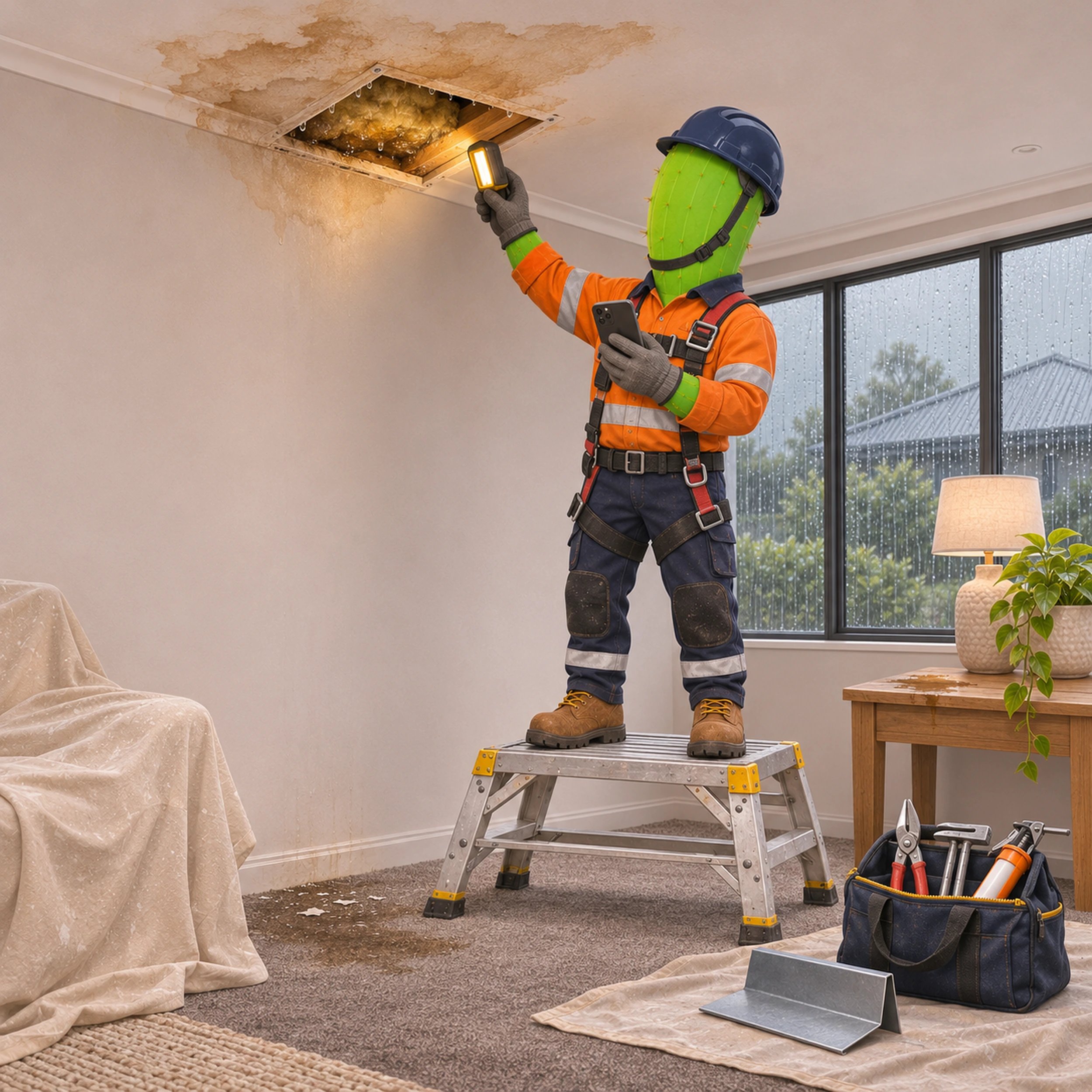
Your liability cover can pick up the damage a leak causes, like wet ceilings, insulation and the owner's gear, once the job is finished. It usually won't pay to redo your own faulty work. Your broker checks the completed-work wording, the workmanship exclusion and your limit before the next job goes out the gate.
Why won't liability pay to fix the roof itself?
Liability is built for damage you cause to other people and their property. Fixing your own faulty workmanship is generally treated as a business cost, and plenty of policies exclude it. The wet ceiling, the ruined carpet and the owner's furniture are a different story. That's the damage most claims are about. So the roof is on you, and the mess underneath can be on the policy.
What does that look like in real life?
You re-roof a house in autumn. Months later a flashing you fitted lets water in, and the owner finds stained ceilings and wet insulation. They ring you, and the builder wants a call-back too. Without the right cover, you're paying for all of it. With it, your broker helps you lodge the claim and keeps you posted.
How long after the job am I still on the hook?
A leak can show up a year or two after you've left. What matters is whether the policy in place when the claim is made, or when the damage happens, picks it up. Your broker checks which way yours works, so a change of insurer doesn't leave a gap.
What will my broker check?
- Whether completed work is covered after you've left the job, and for how long.
- The workmanship exclusion, and exactly what it carves out.
- The limit per claim and the excess.
- Hot work and torch-on conditions.
- Height and roof type limits.
- Subbies and labour-only crew working under you.
Where do my tools, ute and current jobs fit in?
Leaks after handover sit under Liability Insurance. A half-finished re-roof and materials on site sit under Contract Works. Your nail guns and torches are Tools and Equipment, and the ute is Business Vehicles. A broker lines them up so you're not paying twice or missing a gap.
Not sure where you stand? Have a yarn with a broker. Ten minutes about how you work is usually enough to see what's in place and what's missing.
Written by Jay Areora, Commercial Broker, Cactus. Last reviewed 28 October 2026. General information only.
Roofers insurance questions in NZ, answered
General information only. Your broker can explain how it applies to your roofing business.
Do roofers need public liability insurance in NZ?keyboard_arrow_down
Most do. Builders, head contractors and clients often want to see your liability cover before you start. It's there for injury or damage to other people's property that you're legally responsible for. Your broker can check it suits your jobs.
What if a roof leaks after the job is finished?keyboard_arrow_down
Liability cover can respond to the damage a leak causes, like wet ceilings and insulation. Faulty workmanship, the cost of redoing your own work, is often limited or excluded. Your broker checks the completed-work wording and the exclusions so you know where you stand before a call-back lands.
Does insurance cover hot work like torch-on membrane?keyboard_arrow_down
Insurers ask about hot work closely, and some add conditions or exclusions for it. Tell your broker exactly what you do, like torch-on, so they can check the wording before you light up.
Does working at height change my insurance?keyboard_arrow_down
It can. Insurers often ask about the height and type of roofs you work on, and it can change what's offered and the price. Your broker can talk you through what to expect.
How much does roofers insurance cost in NZ?keyboard_arrow_down
It depends on the work you do, your turnover, your claims history and the covers you choose. Your broker goes to a number of NZ insurers and talks you through the options in plain English.
Am I covered if my subbies or labour-only crew cause damage on a roofing job?keyboard_arrow_down
Roofers in NZ who use subbies or labour-only crew can still be on the hook if a sub's work causes damage, because the client often looks to you first. Some liability policies cover subcontractors' work and some don't. Tell your broker who works under you, so the wording matches how your crews actually operate.
Still have a question?
Talk to a broker. No jargon, no hold music.
Expert brokers at your fingertips
Got a question? Give us a ring and have a yarn with a real broker. We're here 8am to 6pm.
Busy on the tools? We'll call you.
Pick a time that suits and a broker will ring you back for a quick chat.
Spread the cost
We have payment options available, so you can pay for your insurance in regular instalments instead of one big hit. Costs and conditions vary.
Get a roofers insurance quote
Fill this in and a real broker will contact you the same business day.