
Electricians insurance in NZ
Switchboards, heat pumps, solar and fit-outs. A dedicated broker who knows the trade goes to a number of NZ insurers and checks the wording, not just the price.
in claims paid since 2018
clients
rating on Google
What are the main insurance risks for electricians?
One loose connection can turn into a big claim. General examples only, not a full list.
Fire traced back to your work
A fault linked to an install or repair can bring a property damage claim, sometimes long after you've left site.
Faults and damage to client property
A surge, a wiring slip or a tripped system can fry a client's appliances, gear or building.
Injury on site
Live systems, ladders and tight roof spaces put you, your crew and others nearby at risk.
Stolen tools and test gear
Testers, meters and tools in the van are a target, and replacing them fast matters.
Van off the road
The van is your workshop. No van can mean no jobs until it's sorted.
Not sure which of these you need? That's what the call is for.
Give us 10 minutes on the phone about how you work: the installs you do, your sites, your gear and your apprentices or subbies. Then we go to a number of NZ insurers and come back with options in plain English. Fill in the form and we'll be in touch the same business day.
What insurance covers do electricians typically need?
Here's what most electricians start with. A broker can sort out the rest. General information only.

Liability
Typically for injury or property damage claims you're legally responsible for, including a fire traced back to your work.

Tools and equipment
Typically for theft, loss or damage to your tools and test gear, with conditions on how it's stored in the van.

Business vehicles
Typically for the van or ute that gets you to jobs and carries your gear.

Contract works
Typically for larger jobs in progress, like fit-outs and new builds.
Am I covered if a fault in my install causes a fire?
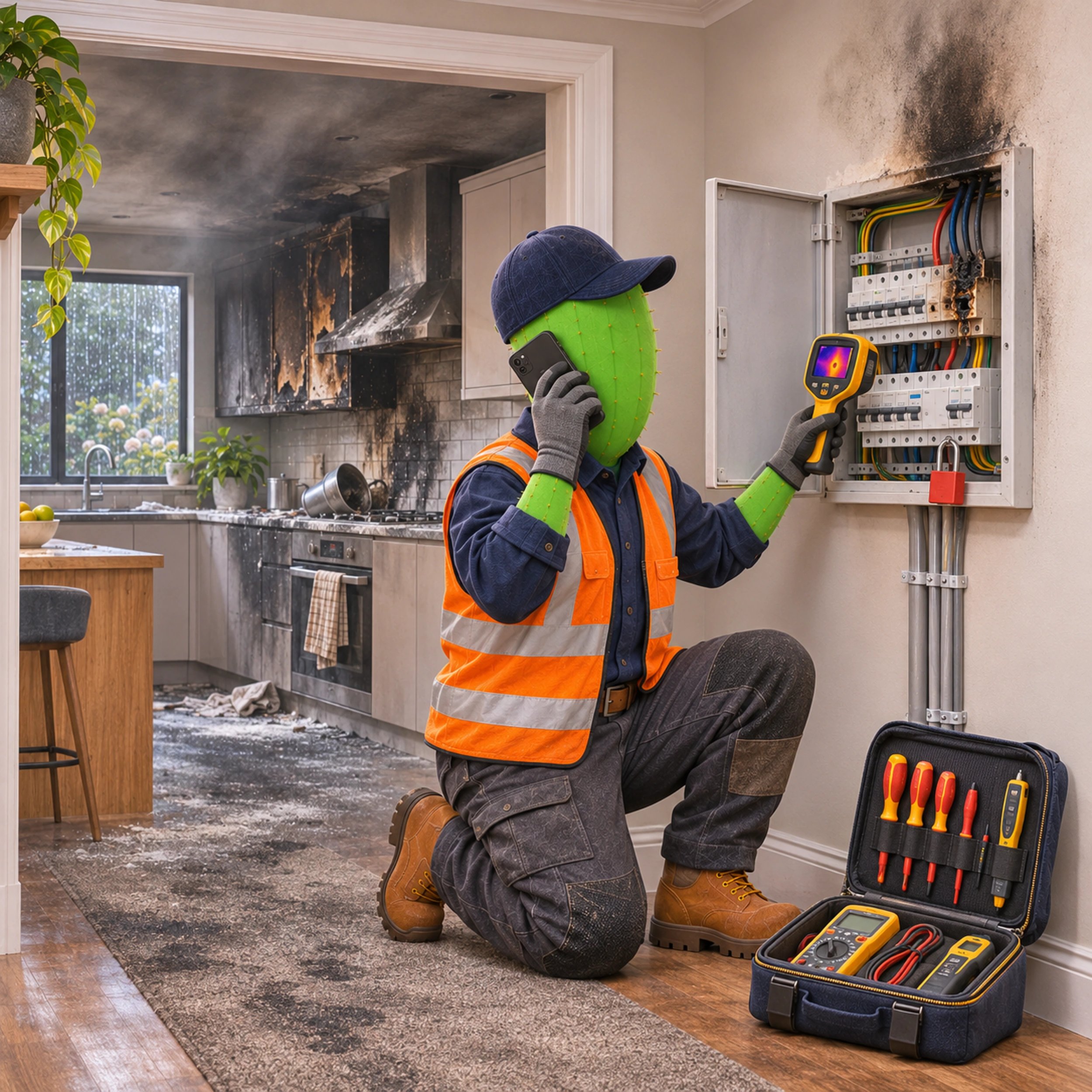
Liability cover can respond if a fault in your install starts a fire and damages someone else's property, but the wording on completed work sets how far it goes. Fixing your own faulty install is usually excluded. A broker checks completed work, limits and excess, so you're not finding out after the smoke clears.
Why isn't it just sorted by my normal cover?
Fire damage to a client's house or a neighbour's shed is the sort of claim liability is built for. The catch is the fine print on finished jobs, faulty workmanship and anything you've signed off. Some policies cut off cover for completed work after a set time. Ask before the next job, not after a claim. Same goes for any work done by a subbie or apprentice under your name.
What does that look like on the job?
You rewire a kitchen in March and a loose connection at the switchboard overheats in August. The fire takes out the kitchen and smoke gets through the house. The owner's insurer chases you for the lot, and the bill can run into six figures. The insurer will want to know who did the work, when, and whether it was signed off. Your broker helps you lodge it and keeps you posted, so you can get back to work.
What will my broker check?
- Whether completed work is covered after you've left site, and for how long.
- How faulty workmanship is worded, and what's carved out.
- The limit, so it covers a house fire, not just a toaster.
- The excess on a fire or damage claim.
- Work by your apprentices and subbies, including who signs off.
- Work on switchboards, heat pumps, solar and commercial fit-outs.
Where do my tools and van fit in?
Your testers and gear sit under Tools and Equipment. The van sits under Business Vehicles. Bigger jobs like fit-outs can need Contract Works. Most electricians start with Liability Insurance and build from there. A broker lines them up so you're not paying twice or missing a gap.
Not sure where you stand? Have a yarn with a broker. Ten minutes about how you work is usually enough to see what's in place and what's missing.
Written by Ken Chan, Insurance Broker, Cactus. Last reviewed 28 October 2026. General information only.
Electricians insurance questions in NZ, answered
General information only. A broker can walk you through how it works for your jobs.
Do electricians need public liability insurance in NZ?keyboard_arrow_down
Most do. Builders, main contractors and clients often ask to see liability cover before you start. It's there for injury or property damage you're legally responsible for, like a fire traced back to your install. Your broker checks the limit suits the jobs you take on.
Is electrical work covered if it goes wrong after the job is finished?keyboard_arrow_down
Liability can respond to claims for damage linked to your finished work, like a fire months later. Fixing the faulty work itself is often excluded. Your broker checks how completed work and faulty workmanship are worded, and for how long you're covered, before you rely on it.
Are my tools and test gear covered when they're in the van?keyboard_arrow_down
Tools and equipment cover is for theft, loss or damage to your gear, including gear kept in the van. Insurers often set conditions on how it's stored, like locked and out of sight overnight. Your broker checks those before you sign.
Do I need my own cover if I work as a subcontractor?keyboard_arrow_down
Many head contractors expect subbies to carry their own liability cover. If you're a sole trader or a small crew, you'll usually need your own. A broker can explain how it works for your set-up.
How much does electricians insurance cost in NZ?keyboard_arrow_down
Cost depends on the work you do, your turnover, your claims history and the covers you choose. Your broker goes to a number of NZ insurers and talks you through the options in plain English.
Are heat pump and solar installs covered by electrician insurance in NZ?keyboard_arrow_down
Heat pump and solar installs are common electrician work in NZ, but insurers want to know about them. Tell your broker about every type of job you do, including roof-mounted solar and battery work, so your liability cover is set up for it. It's an easy gap to miss and a hard one to fix after a claim.
Still have a question?
Talk to a broker. No jargon, no hold music.
Expert brokers at your fingertips
Got a question? Give us a ring and have a yarn with a real broker. We're here 8am to 6pm.
Busy on the tools? We'll call you.
Pick a time that suits and a broker will ring you back for a quick chat.
Spread the cost
We have payment options available, so you can pay for your insurance in regular instalments instead of one big hit. Costs and conditions vary.
Get an electricians insurance quote
Fill this in and a real broker will contact you the same business day.